
Pack 4 TSA Friendly Items to Wash Underwear, Plus Period Tips

Hand-wash a small batch of underwear in a sink or a wash bag, towel-roll to remove water, and hang to dry overnight. Pack a compact kit: detergent sheets, a universal sink stopper, a microfiber towel, and a braided clothesline. Stick to quick-dry fabrics like synthetics or merino, wash every day or two, and you’ll never dig through a bag for a clean pair again.
TL;DR:
- Use detergent sheets and a universal sink stopper with a braided clothesline for lightweight, versatile travel laundry, suitable for quick-drying fabrics like synthetics or merino.
- Hand-wash underwear in a sink takes five to ten minutes active effort, with optimal soak times of five to ten minutes and drying hours ranging from one to eight depending on fabric.
- A Scrubba-style wash bag is recommended for unreliable sinks or shared bathrooms, holding only small loads like underwear and socks, with proper maintenance essential.
- Pack five to seven pairs of underwear for ongoing washing routines, with a rotation that ensures always having a dry pair even if drying takes longer in humid or cold climates.
- Period underwear should be rinsed promptly in cool water, washed gently, and fully dried overnight to maintain absorbency and prevent damage.
Table of Contents
- Building Your Travel Laundry Kit
- How Do You Hand-Wash Underwear In A Sink?
- When Should You Use A Wash Bag Instead Of A Sink?
- Which Detergent Should You Pack, And How Much?
- Which Fabrics Actually Dry Overnight?
- How Do You Get Underwear Dry By Morning?
- Laundromat Or Hotel Service: When Hand-Washing Isn’t Worth It
- How Many Pairs Of Underwear Should You Pack?
- Travel Care For Period Underwear
- A Traveler’s Nightly Routine That Actually Stuck
- Travel-Ready Period Underwear And Care Support From Sweeteebeauty
- Sources
Building Your Travel Laundry Kit
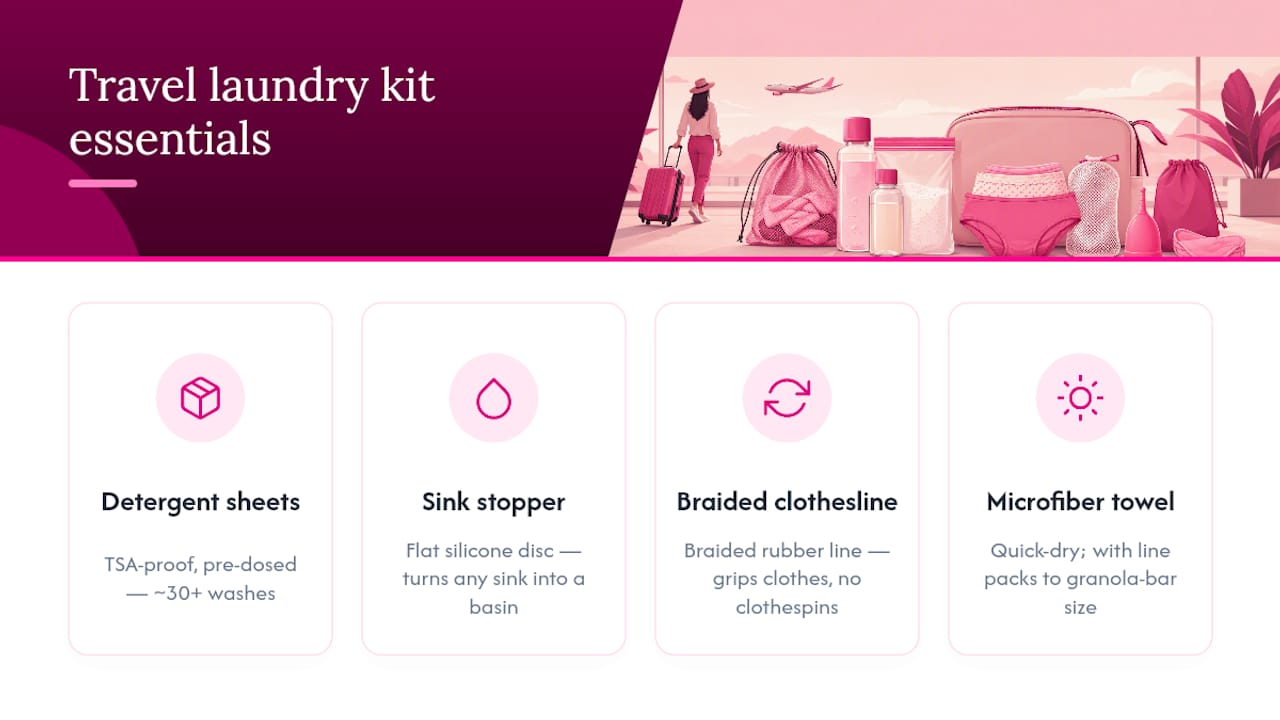
The right kit fits in a sandwich bag and weighs less than your phone charger. Four items handle almost every hotel room, hostel bathroom, or campsite sink you’ll encounter.
Detergent sheets are the default choice for most travelers, and for good reason. They’re flat, pre-dosed, and TSA-proof since they’re solid rather than liquid, so you skip the carry-on liquids fuss entirely. A single passport-sized pack often supplies 30 or more washes, and they dissolve in cold or warm water just as well in a sink as in a machine. Liquid concentrate still has a place in your kit if you’re dealing with greasy stains or heavy soil. Decant a small amount into a leakproof travel bottle, but remember it counts toward your 3.4 oz carry-on liquid allowance. A bar of laundry soap is the low-tech backup: it never leaks, never spills, and works well when you’re rinsing out a single pair of underwear in a rush.
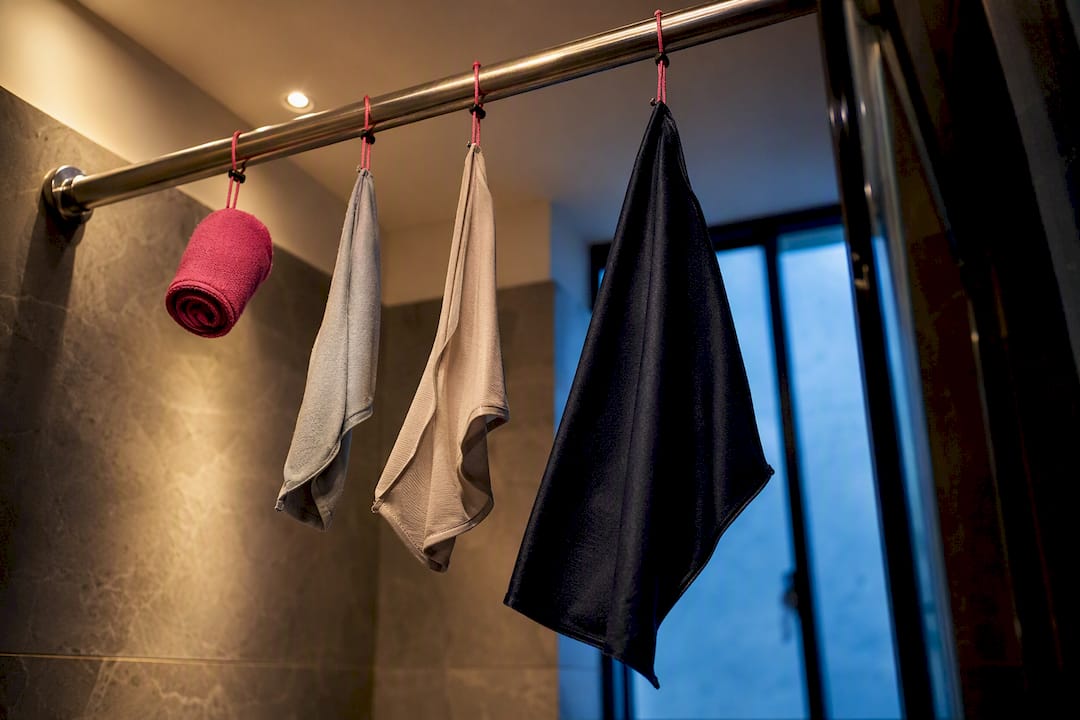
A universal sink stopper solves the single most annoying problem in hotel laundry: half of all hotel sinks either lack a stopper or have a broken one. It’s a flat silicone disc, weighs almost nothing, and turns any sink into a usable basin. Pair it with a braided rubber clothesline (the kind that grips clothes without clothespins) and a microfiber travel towel, and you’ve got a complete drying setup that packs into the size of a granola bar.
A Scrubba-style wash bag is optional gear, not essential gear. It’s a dry bag with an internal ridged panel that acts like a mini washboard, letting you scrub clothes by squeezing and rolling the bag instead of kneading them by hand. Most versions weigh 70 to 150 grams, which is worth carrying if you wash daily, share bathrooms with roommates, or travel somewhere sinks are scarce, like multi-day treks or overnight trains.
Pro Tip: Buy detergent sheets in bulk before a long trip and pre-cut a few into quarters. A quarter sheet is plenty for a single pair of underwear and stretches your supply four times as far.
How Do You Hand-Wash Underwear In A Sink?
This routine takes about five to ten minutes of active effort per session, and once you’ve done it twice, it becomes automatic.
- Plug the sink and fill with cool or lukewarm water. Cold water protects elastic waistbands and colored fabric; hot water can break down stretch fibers over repeated washes.
- Add your detergent. A quarter sheet or a pea-sized amount of liquid concentrate is enough for one or two pairs of underwear. More soap just means more rinsing later.
- Submerge and soak for 5 to 10 minutes. This is the step travelers skip, and it’s the one doing most of the actual cleaning. Letting fabric sit in soapy water loosens body oils and odor-causing bacteria without you lifting a finger.
- Knead gently for 2 to 3 minutes, concentrating on the waistband and crotch area where sweat and residue collect most. Squeeze and release rather than scrubbing hard. This gentle press-and-release motion, done for two to three minutes per item, is enough agitation for lightly soiled underwear.
- Drain and rinse with fresh water until it runs clear. Refill the sink once or twice if needed. Cloudy rinse water means soap residue is still trapped in the fabric, and dried-in detergent is what causes that stiff, itchy feeling.
- Squeeze out excess water by hand. Don’t twist or wring; that stretches out elastic and seams over time.
- Towel-roll to extract the rest. Lay the item flat on your travel towel, roll it up like a burrito, and press firmly for 30 to 60 seconds. This single move removes a significant amount of remaining moisture, cutting your drying time dramatically compared to hanging it soaking wet.
- Hang immediately with airflow. Shower rod, window ledge, or anywhere air moves through the space.
Estimated timing: total active hands-on time runs 5 to 10 minutes. Drying time is where fabric matters most. Thin synthetic underwear can be dry in 1 to 3 hours with good airflow. Merino wool needs 4 to 8 hours. Heavier cotton can take 8 hours or more, sometimes stretching past 24 in humid climates.
A soak time of 5 to 10 minutes with 2 to 3 minutes of active kneading is the sweet spot experts point to again and again. Shorter, and detergent doesn’t have time to work. Longer, and you’re just standing around a sink for no benefit.
The whole process feels awkward the first time and takes maybe ten minutes total, counting the soak. By the third or fourth night it’s no different from brushing your teeth, just something you do before bed.
When Should You Use A Wash Bag Instead Of A Sink?
A wash bag earns its spot in your pack the moment sinks become unreliable, whether that’s a shared hostel bathroom with three people waiting, a campsite with no plumbing at all, or a hotel where the stopper is missing and duct tape isn’t an option.
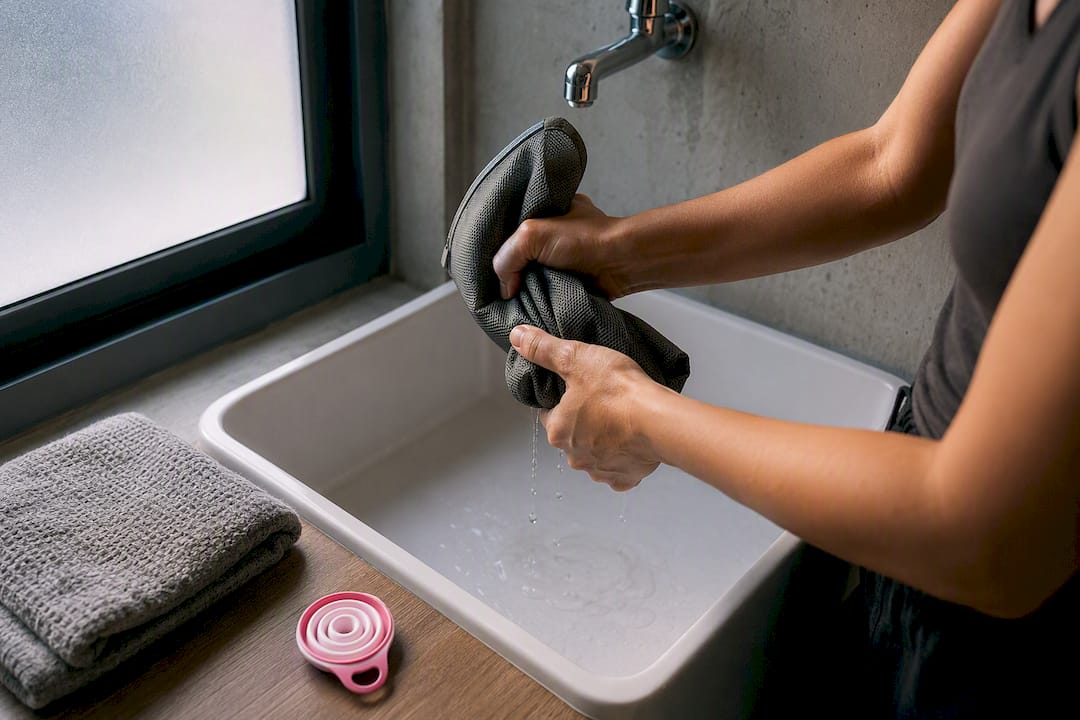
The privacy factor matters more than people expect. Scrubbing underwear in a shared bathroom sink while roommates walk in and out is a specific kind of awkward that a sealed wash bag eliminates entirely. Wash bags contain the whole process, so nobody sees a soapy sink full of underwear, and you’re not tying up a communal space.
Here’s the step-by-step process for a Scrubba-style bag:
- Fill to the marked line with water (usually cool to lukewarm, never hot, since heat can damage the bag’s seams).
- Add a quarter to half a detergent sheet, or a small dab of liquid soap.
- Seal the bag according to its air-release valve instructions.
- Scrub by rubbing the bag’s exterior against its internal ridged panel for 1 to 3 minutes. This mimics a washboard motion without you touching the water directly.
- Drain the soapy water, refill with clean water, and repeat the same motion for 30 to 60 seconds to rinse.
- Remove items and towel-roll them the same way you would after a sink wash.
- Hang to dry using your clothesline or any available airflow.
Most compact wash bags hold a small load, roughly one t-shirt or a couple of pairs of socks and underwear at a time. Don’t overpack it. Cramming in too much fabric blocks the internal ridges from doing their job, and you’ll end up rewashing items anyway.
Maintenance is simple but easy to forget. Rinse the bag itself after each trip, let it air out completely before folding it away, and check the seal periodically for wear. A moldy wash bag stuffed in the bottom of your suitcase for six months is not a pleasant discovery.
Pro Tip: Never fill a wash bag past the manufacturer’s line. Overfilling strains the seams and the air valve, and a burst bag mid-scrub is a mess you don’t want in a shared hostel bathroom.
Which Detergent Should You Pack, And How Much?
Choosing detergent for travel comes down to matching the format to how often you’ll wash and what you’re washing.
- Detergent sheets: Use a quarter sheet for a single pair of underwear, a half sheet for a small mixed load of underwear and socks. They work in both sink washes and actual machines, which makes them the most versatile option if you’re not sure whether you’ll find a laundromat along the way. Sheets dissolve fully in warm or cold water, leaving no gritty residue behind.
- Liquid concentrate: Best reserved for genuinely dirty items, sweat-soaked activewear, stained underwear, anything that needs a stronger clean than a quick refresh. Decant it into a small leakproof squeeze bottle before you pack, and label it clearly so it doesn’t get mistaken for something else at security. It counts against your carry-on liquid allowance, so budget the space accordingly.
- Bar soap: The most foolproof option for anyone nervous about leaks or spills in a packed bag. A dedicated laundry bar (rather than a bath soap bar) rinses cleaner and leaves less film on synthetic fabric. Rub it directly onto damp fabric, focus on the waistband and crotch, then proceed with the standard soak-and-rinse routine.
If you’re washing period underwear, dosing matters even more since built-up residue can affect the absorbent layers over time. A lighter dose, thoroughly rinsed, beats a heavy dose you’re not sure you rinsed out completely.
Which Fabrics Actually Dry Overnight?
Not every fabric plays fair with a sink-and-clothesline routine, and picking the wrong one is the fastest way to end up wearing damp underwear at 7 a.m.
Realistic drying windows, assuming reasonable airflow and a towel-roll extraction first:
- Synthetics (nylon, polyester blends): 1 to 3 hours. These are the fastest-drying option by a wide margin and the safest bet for anyone washing nightly.
- Merino wool: 4 to 8 hours. Slower than synthetics but naturally odor-resistant, so you can often stretch a wear or two between washes.
- Cotton: 8 to 24 hours or more, especially in humid climates. Cotton holds water in its fibers far longer than synthetic blends, which is exactly why it’s the worst fabric choice for a fast travel routine.
- Silk: Dries relatively quickly but is delicate enough that aggressive wringing or hot water can damage it, so treat it gently and skip the towel-roll press if the fabric feels fragile.
Merino and synthetic fabrics dramatically outperform cotton on both drying speed and odor resistance, which is why most travel-specific underwear brands lean on one or the other rather than cotton blends. Cotton absorbs and holds onto sweat and bacteria, which is part of why it stays damp longer and can develop a sour smell faster than moisture-wicking alternatives.
Merino needs a specific caution: always wash it in cool water and never put it in a dryer. Heat causes wool fibers to shrink and felt, permanently altering the fit. If you’re buying travel underwear specifically for a wash-and-dry routine, checking the fabric tag before you pack is worth the thirty seconds it takes.
How Do You Get Underwear Dry By Morning?
Getting a wet item dry overnight comes down to two things: how much water you removed before hanging it, and how much air moves past it while it dries.
- Towel-roll immediately after rinsing. Lay the item flat on a dry towel, roll it tightly, and press with your full body weight for 30 to 60 seconds. This step alone removes a large share of the water still sitting in the fabric, and pairing it with airflow is often the difference between damp underwear at breakfast and dry underwear at breakfast.
- Hang it somewhere air actually moves. A shower rod works, but only if the bathroom fan is running or the door is cracked. Near a window with a breeze, next to an air conditioning unit, or directly under a ceiling fan all beat a still, closed room.
- Space items apart. Two pairs of underwear touching each other on the line dry slower than the same two pairs hung six inches apart, since trapped moisture between them has nowhere to go.
- Point a fan or the air conditioner directly at the clothesline if you have one. Moving air evaporates surface moisture far faster than still air, even at the same temperature.
In humid climates, all of this slows down considerably. If you’re in a tropical destination or traveling during monsoon season, build in a backup: pack one extra pair of quick-dry underwear specifically as an emergency spare, and consider running the bathroom fan or air conditioning overnight even if the room feels comfortable without it.
Pro Tip: Wash right after your evening shower, not first thing in the morning. You’re using dead overnight hours for drying time you’d otherwise waste, and you won’t be rushing to pack a damp item into your bag before an early checkout.
Laundromat Or Hotel Service: When Hand-Washing Isn’t Worth It
Hand-washing covers most of what a traveler needs, but it isn’t the right tool for every job.
- Choose a laundromat for jeans, towels, heavy cotton, or anything approaching a full load. Hand-washing a pair of jeans in a hotel sink is a losing battle. It won’t get properly clean and it definitely won’t dry overnight. Laundromats also make sense in very humid or cold conditions where line-drying simply doesn’t work no matter how good your technique is.
- Choose hotel or drop-off laundry service when your time is worth more than the cost difference. Expect to pay noticeably more than a laundromat and wait anywhere from several hours to a full day for turnaround, but you hand over the whole task and get it back folded.
- Prep drop-off laundry properly. Pre-treat any visible stains before handing items over, since most services don’t spot-treat by default. Separate delicates into their own bag and flag anything that needs special care, like wool or silk, so it doesn’t end up in a hot dryer with everything else.
For underwear specifically, the sink or wash bag routine will almost always beat both paid options on cost and convenience. Save the laundromat and hotel service for the bulky, heavy items that a sink was never going to handle anyway.
How Many Pairs Of Underwear Should You Pack?
The math is simpler than most packing lists make it look. If you’re washing every day or every other day, five to seven pairs covers you indefinitely, regardless of trip length.
- 5 pairs works if you’re committed to washing every single night, which pairs naturally with the sink routine above.
- 7 pairs give you a buffer for travel days, sightseeing marathons, or nights when you’re too tired to wash anything.
- A 2 to 3 day rotation (wear, wash, dry, repack) means you’re never more than a couple of items away from running out, even if one night’s wash doesn’t fully dry.
Store damp items in a dedicated wet bag or a plastic zip bag separate from dry clothes; nothing ruins a packed suitcase faster than one still-damp pair of underwear pressed against your clean shirts. If something isn’t fully dry by checkout, clip it to the outside of your daypack for a few hours of airflow while you’re in transit, rather than sealing it away wet.
A sample 7-day carry-on plan: pack 6 pairs, wash one pair nightly in rotation, and you’ll always have a dry pair ready even if one night’s dry time runs long.
Travel Care For Period Underwear
Period underwear needs a slightly gentler routine than regular underwear, mostly because of the absorbent core layered into the fabric.
- Rinse promptly after wearing, ideally the same evening. Letting fluid sit for a full day before washing makes stains harder to lift and gives odor more time to set into the layers.
- Hand-wash gently in cool water, using the same soak-and-knead approach covered earlier, but skip the aggressive wringing. The multilayer core inside period underwear is more delicate than a standard cotton blend, and twisting it hard can compress or damage the absorbent layers over repeated washes.
- Dry completely before packing or storing. Never fold a pair away while it’s even slightly damp. Hang it until it’s fully dry, or use the towel-roll technique first to speed things along, then finish with airflow.
- Machine washing is fine once you’re home or somewhere with reliable laundry access; just skip the dryer’s high-heat setting, which can wear down elastic and absorbent fibers faster than air drying.
- Pretreat stains gently with a small amount of cold water and mild soap rather than scrubbing hard, which protects the layered construction underneath.
For a fuller walkthrough of washing techniques that protect absorbency over the long term, Sweeteebeauty’s guide to washing period underwear covers the specifics in more depth than a quick travel routine can.
A Traveler’s Nightly Routine That Actually Stuck
The routine that finally worked for me was almost embarrassingly simple: wash right after the evening shower, towel-roll for a minute, hang on the shower rod, check in the morning. That’s it. No overthinking, no elaborate setup.
What changed wasn’t the technique so much as the timing. Doing it right after showering meant I was already in the bathroom, already dealing with wet things, and the overnight hours did the drying work for free. No more emergency underwear purchases at an airport shop, no more stuffing a heavier bag with ten days of clean pairs I didn’t need.
If you’re skeptical, try it for one night before committing to the whole system. Wash one pair, hang it somewhere with airflow, and see how it looks by morning. Adjust the fabric or the drying spot from there.
— Tiera
Travel-Ready Period Underwear And Care Support From Sweeteebeauty
If you’re already building a wash-and-rotate routine for regular underwear, period underwear deserves the same thinking, minus the guesswork about absorbency running out mid-trip. Some period underwear brands make leak-proof, reusable period underwear in multiple absorbency levels, from light days to heavy flow and postpartum, so you can pack fewer items and wash less often without worrying about a leak ruining a travel day.

The multilayer design of many period underwear products is built to survive exactly the kind of gentle sink or wash-bag routine covered above, which matters when you don’t have access to a machine for a week at a time. For travelers dealing with heavier flow, the heavy flow protection collection offers higher absorbency without added bulk in your packing cube. If you want a style that layers well under travel clothes, the Lace HipHugger is a solid pick, and the HipHugger bundle is worth checking if you’re outfitting a full rotation before a longer trip. Browse the collection and put together a travel set that matches your flow and your wash schedule before your next departure.
Sources
For deeper detail on any single step above, a few sources are worth bookmarking. Kit Authority’s travel laundry guide breaks down detergent sheet dosing. The Scrubba product page covers wash bag specs and capacity. ChoosePack’s laundry comparison helps weigh sink versus laundromat versus service. TravelClothes’ hand-wash breakdown has more detail on the towel-roll technique, and Sweeteebeauty’s own drying gear guide rounds out the packing list with backpacker-tested gear picks.
- Kit Authority — How to wash clothes while traveling
- Scrubba — Scrubba wash bag product page
- TravelClothes — How to hand-wash clothes in a hotel sink
- AARP — How to wash your clothes while traveling


