
Stop Seam Irritation Underwear Causes Today

Stop underwear seam irritation by removing the source of friction, protecting the raw skin, and switching to seamless or flat-seam styles. That’s the fastest path to relief, and most of the time you’ll feel a difference within a day.
Do this now:
- Change into seamless or soft-lined underwear as soon as you notice rubbing.
- Apply an anti-chafe balm or a thin layer of barrier cream to any red or raw spots.
- Cover small broken-skin areas with a breathable, fabric-friendly bandage until they heal.
- Skip tight elastic waistbands and anything with a raised, overlocked seam for a few days.
If you’re shopping for a longer-term fix, Sweeteebeauty makes seamless period underwear with bonded, laser-cut edges and moisture-managing layers built specifically to avoid this problem.
Table of Contents
- What Causes Seam Irritation Underwear Problems?
- Who Gets Seam Irritation the Most?
- How Do Seamless and Bonded Constructions Stop the Rubbing?
- How to Choose Underwear That Won’t Irritate Your Skin
- What Helps Seam Irritation Right Away?
- Sweeteebeauty’s Seamless Option for Sensitive Skin
- Frequently Asked Questions
- Sources
What Causes Seam Irritation Underwear Problems?
Seam irritation is chafing with a specific trigger: a raised ridge of fabric or thread rubbing against skin, over and over, until the surface layer breaks down. Cleveland Clinic describes chafing as skin irritation from repeated rubbing, and notes that moisture and heat make it worse because damp skin is softer and more vulnerable to friction damage. A seam that’s barely noticeable when you’re dry can feel like sandpaper after an hour of sweat.
Pressure matters as much as friction. A seam that sits directly over a hip bone or presses along the crease of the thigh creates a concentrated pressure point, and for some people that triggers a delayed skin reaction rather than simple redness. Tight elastic does the same thing at the waistband.
Fabric chemistry plays a supporting role, too. Rough synthetic finishes, stiff lace overlays, and dye residues can all add low-grade irritation on top of the mechanical rubbing, according to XYXX Apparels, which points to fabric, fit, friction, and trapped sweat as the four drivers of underwear irritation.
- Friction breaks down the skin’s surface layer over time.
- Moisture and heat speed up that breakdown.
- Pressure points from seams and elastic can trigger reactions on their own.
- Rough or chemically treated fabric adds a second layer of aggravation.
Who Gets Seam Irritation the Most?
People with sensitive skin, heavy sweaters, and anyone in tight or ill-fitting underwear face the highest risk. Add anyone with a history of allodynia or a mast cell condition, where normal fabric pressure can register as real pain rather than mild annoyance, per JulieMay Lingerie.
- Sensitive or eczema-prone skin
- Frequent exercisers or people who sweat heavily during the day
- Anyone wearing underwear that’s too tight or a size too small
- People with allodynia, mast cell disorders, or chronic dermatitis
Ordinary days do the damage, too. Walking, sitting at a desk, or a routine workout all put repeated pressure on the same fabric spot for hours. For some readers, the fix isn’t a balm. It’s underwear built without the seam in the first place.
How Do Seamless and Bonded Constructions Stop the Rubbing?
Seamless, laser-cut, bonded, and flatlock constructions all solve the same problem differently: they remove or flatten the raised edge that causes friction. Seamless underwear is knit as one continuous piece, so there’s no stitched seam at all in the areas that matter most. Laser-cut edges use heat instead of a needle, sealing the fabric edge flat rather than folding and stitching it. Bonded construction fuses two fabric layers with heat or adhesive instead of thread, which is exactly how Sweeteebeauty’s seamless bikini achieves its smooth edges. Flatlock stitching, when a seam is unavoidable, presses the seam allowance flat against the fabric instead of leaving a raised ridge.
- No raised ridge means nothing to catch on skin during movement.
- Bonded edges lie flush against the body instead of standing off it.
- Flatlock spreads pressure across a wider, flatter surface than a standard seam.
These constructions work best paired with breathable activewear moisture-wicking fabric, since dry skin resists friction far better than damp skin. UnderwearIQ reports that seamless designs combined with moisture-wicking materials can meaningfully reduce irritation compared with traditional sewn seams, which is why the fabric and the construction should be evaluated together, not separately.
How to Choose Underwear That Won’t Irritate Your Skin
Run through this checklist before you buy, whether you’re shopping online or reading a label in a store.
- Check the seam construction. Look for “seamless,” “laser-cut,” or “bonded” in the product description rather than “overlocked” or “serged.”
- Confirm the fabric type. Moisture-wicking synthetics, modal, and microfiber outperform untreated cotton once you start sweating.
- Feel the waistband. It should be wide and soft, not narrow and tightly cut, since narrow elastic concentrates pressure into a thin line.
- Look for tagless labeling. Printed or heat-transferred labels remove one more friction point at the waist.
- Check the sizing guidance. A garment that’s snug in the wrong spot will chafe no matter how good the seam is, so size up if you’re between sizes.
Before buying, ask the retailer’s customer service or check the Q&A section for specifics:
- “Are the seams bonded or laser-cut, or are they raw-cut and stitched?”
- “Is the fabric moisture-wicking, or will it hold sweat against my skin?”
- “What’s the return policy if the fit doesn’t work out?”
Watch for red flags that predict irritation before you even try the product on: raised overlocked seams visible from the outside, narrow cutting elastic that leaves an indentation, untreated cotton blends that stay damp after light activity, and heavy textured lace sitting directly against skin rather than lined with a smoother layer underneath. Sweeteebeauty’s period underwear line spans several absorbency levels and styles, which matters if you’re also managing flow, since a snug fit for leak protection shouldn’t come at the cost of a seam digging into your hip.
What Helps Seam Irritation Right Away?
Treat active irritation in this order: clean the area gently, let it dry fully, apply a barrier product, then switch into seam-free underwear for at least a day.
- Wash the irritated area with mild soap and pat it dry. Don’t rub.
- Let the skin air out for a few minutes before covering it again.
- Apply a thin layer of a barrier product suited to the severity of the irritation.
- Change into seamless or flatlock underwear immediately, even if it means doing laundry sooner than planned.
For the barrier product itself, match it to what you’re dealing with: petroleum-based anti-chafe balms for mild redness, zinc oxide paste for broken or weepy skin, talc-free cornstarch powder to manage moisture in skin folds, and breathable silicone strips or bandages over small raw patches that need protection during the day.
- See a clinician if the area looks infected (spreading redness, warmth, pus) or if dermatitis keeps coming back despite switching underwear.
- Wash new underwear before wearing it, skip fabric softener, and air-dry when possible since heat from a dryer can stiffen elastic and fabric finishes over time.
Sweeteebeauty’s Seamless Option for Sensitive Skin
If you’ve tried the quick fixes and keep landing back at the same raw spot, the underwear itself is probably the real problem, not your skin. Sweeteebeauty builds its seamless bikini period underwear around bonded edges, tagless labeling, and a layered moisture-managing core, so there’s no stitched seam left to catch on skin during a full day of wear.
Sizing matters more with seamless styles than with traditional cuts, since a snug bonded edge that’s a size too small will still create pressure even without a stitched seam. If you’re shopping for period protection specifically, match the absorbency level to your flow first: light for spotting days, moderate to heavy for regular cycle days, and dedicated heavy flow styles for the days you need real coverage. Teens with more sensitive skin or a different fit need might start with the teen brief style rather than an adult cut sized down.
If you’re not sure which style fits your body and your flow, try a single pair before committing to a multipack, and check the return policy for fit issues before you check out. Browse the full period underwear collection to compare absorbency levels and styles, and pick the pair that matches how you actually move through your day.
What Actually Fixed It, in Practice
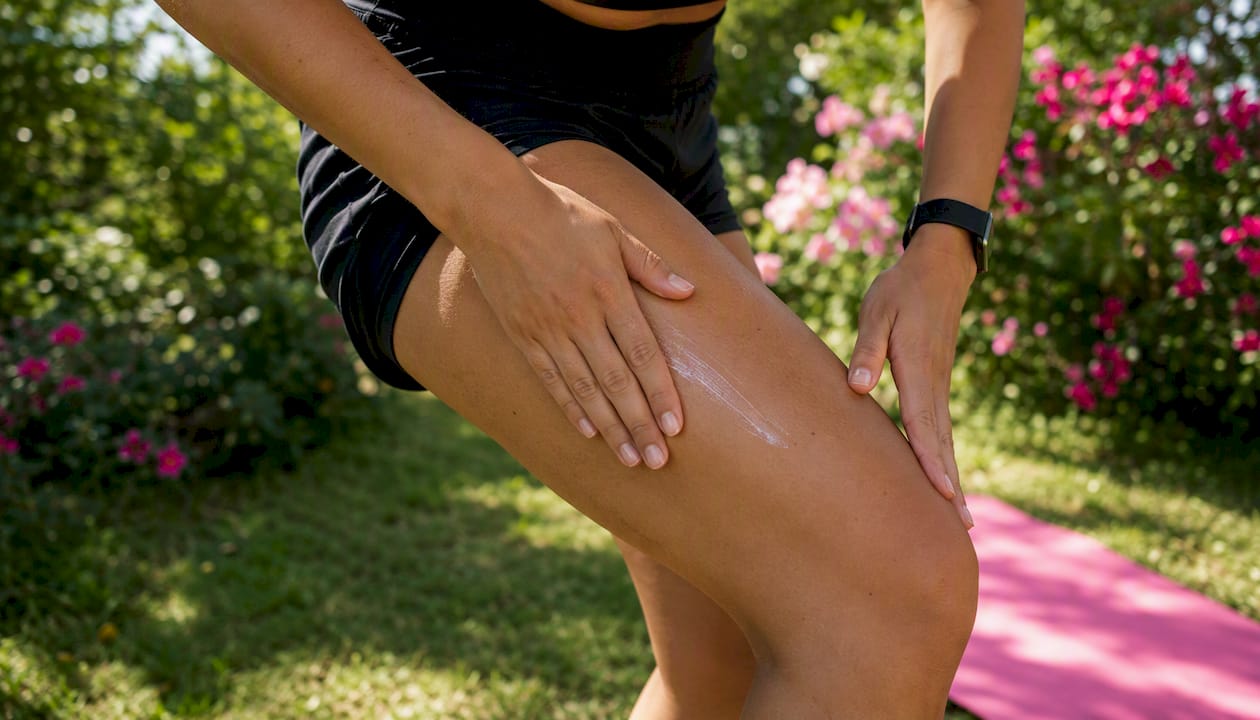
Switching to laser-cut, moisture-wicking underwear solved most of my recurring hip and thigh irritation within a week, and pairing that with a thin anti-chafe balm before workouts closed the gap entirely. It wasn’t complicated. It was just the right construction plus one small habit, and most people see real improvement that fast.
The fastest way to end seam irritation permanently is to replace the garment, not just treat the symptom.
| Point | Details |
|---|---|
| Friction plus moisture drives damage | Sweat softens skin, which speeds up the wear from a rubbing seam. |
| Pressure points matter as much as rubbing | Raised seams and tight elastic can trigger reactions even without visible chafing. |
| Construction beats topical fixes long term | Seamless, laser-cut, or bonded edges remove the friction source instead of masking it. |
| Fabric and construction work together | Moisture-wicking materials paired with seam-free design outperform either fix alone. |
| Sweeteebeauty offers a seamless option | Its bonded, tagless, seamless bikini period underwear targets sensitive skin directly. |
Frequently Asked Questions
Does seamless underwear actually stop irritation, or is it marketing? It works because it removes the physical cause, not just the symptom. Seamless construction eliminates the raised stitched edge that rubs against skin, and pairing it with moisture-wicking fabric compounds the benefit since dry skin resists friction better than damp skin.
Can cotton underwear cause seam irritation, or is it always the fabric’s fault? Cotton itself isn’t the problem so much as what happens when it gets wet. It holds moisture against skin longer than technical synthetics or modal, and that dampness softens skin and speeds up friction damage from any seam, cotton or otherwise.
How long does it take for seam irritation to heal once I fix the cause? Mild redness often improves within a day or two once the friction source is gone and a barrier product is in use. Broken skin or dermatitis can take longer, and it’s worth seeing a clinician if it hasn’t improved noticeably within a week.
Is tight underwear worse than the wrong fabric for causing irritation? Both contribute, but tight underwear tends to cause more immediate, sharper irritation because it concentrates pressure at the waistband and leg openings. Loose enough sizing plus the wrong fabric usually causes slower, milder chafing instead.
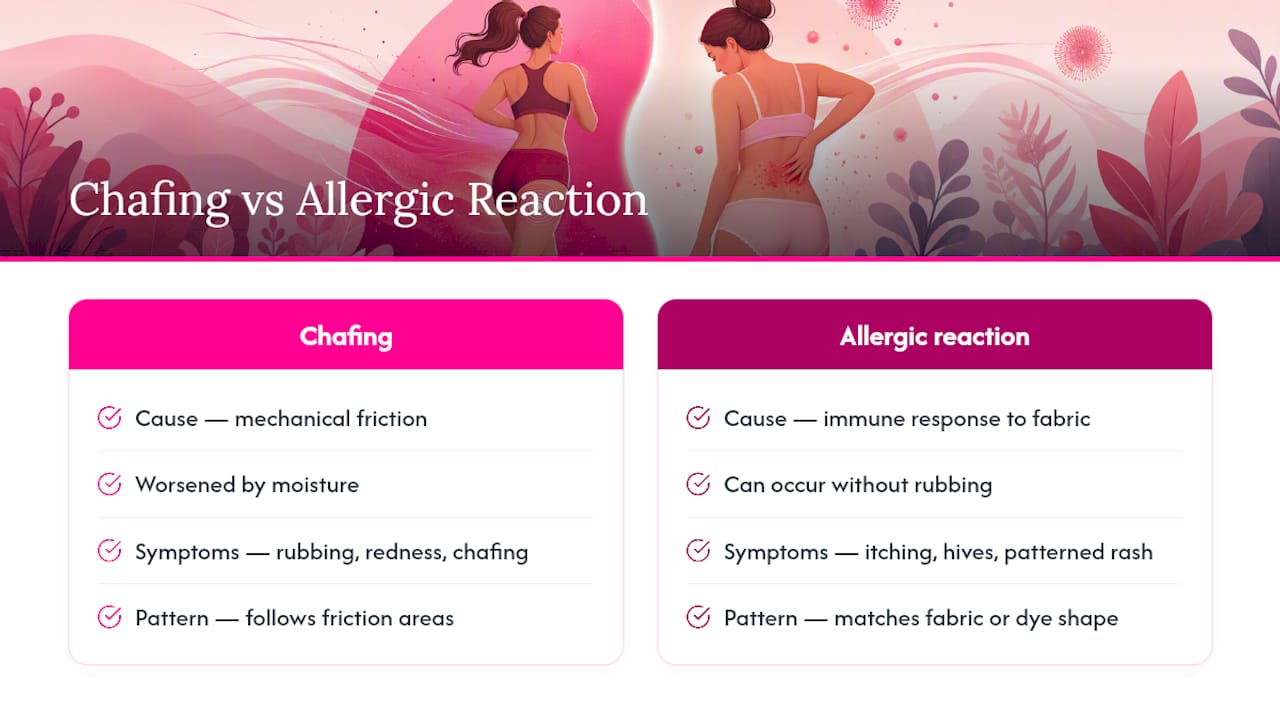
What’s the difference between chafing and an allergic reaction to underwear? Chafing is mechanical, caused by friction and made worse by moisture, per Cleveland Clinic. An allergic reaction typically involves itching, hives, or a rash pattern that follows the exact shape of a specific fabric, dye, or elastic, even without heavy rubbing.
Sources
- Chafing - Cleveland Clinic
- What Is Seamless Underwear? Everything You Need to Know - WearLivra
- Why Your Underwear Is Causing Skin Irritation | XYXX Apparels
- When Seams & Tight Bands Hurt: Causes and Soft Fixes – JulieMay Lingerie UK
- Seamless Underwear Benefits for a Smooth Silhouette - UnderwearIQ
Recommended
- Period Underwear vs. Pads: Which Is Better? | SweeTee Beauty | SweeTee Beauty
- How to Wash Period Underwear & Make It Last | SweeTee Beauty | SweeTee Beauty
- Period Underwear | Leak-Proof Styles for Every Body | SweeTee | SweeTee Beauty
- How Period Underwear Works | The SweeTee Journal | SweeTee Beauty


