
Period Underwear Materials: What to Pick for Every Flow

The fastest way to choose period underwear is to judge it by three layers: the wicking top, the absorbent core, and the waterproof membrane. Match those materials to your flow, skin sensitivity, and how much you care about sustainability, and the rest of the decision falls into place. Look for a top layer of organic cotton or Tencel, a core built from microfiber or an engineered absorbent like Zorb, and a membrane made from PUL or TPU rather than PVC. Certifications like OEKO-TEX and GOTS, plus a stated tampon-equivalent absorbency (commonly a range of 1 to 5 tampons’ worth depending on style), tell you whether a brand like Sweeteebeauty has actually tested what it’s selling.
Quick matches by flow:
- Light flow: Tencel or Modal top layer, one layer of Zorb or microfiber core
- Moderate flow: organic cotton or bamboo top, two-layer microfiber core, PUL membrane
- Heavy or overnight flow: microfiber or Zorb core stacked two to three layers deep, TPU barrier, wider gusset for coverage
Key Takeaways
Choosing period underwear comes down to matching wicking-layer, absorbent-core, and membrane materials to your flow and skin sensitivity, then confirming PFAS-free and OEKO-TEX testing before buying.
| Point | Details |
|---|---|
| Judge by layer, not label | Evaluate the top, core, and membrane materials separately rather than trusting a single “leak-proof” claim. |
| Match material to flow | Light flow suits Tencel or cotton tops; heavy flow needs multi-layer microfiber or Zorb cores with TPU barriers. |
| Prioritize PFAS-free certification | Look for OEKO-TEX Standard 100 and explicit lab-backed PFAS-free statements, per Harvard’s public health reporting. |
| Fiber-level odor control lasts longer | Technologies like Creora Fresh outperform surface antimicrobials because they don’t wash off over time. |
| Sweeteebeauty applies this framework directly | Its multilayer, PFAS-free gussets cover flow levels from teen to heavy-flow with OEKO-TEX-tested components. |
Table of Contents
- How Period Underwear Materials Work Together
- Period Underwear Fabrics by Layer: Pros, Cons, and Best Uses
- Is PFAS a Real Concern in Period Underwear Materials?
- How Do You Choose the Right Period Underwear Material?
- Washing and Lifespan by Material Type
- Fixing Common Period Underwear Problems
- What New Fiber Technology Is Changing Period Underwear?
- Shop Period Underwear Built on These Material Standards
- Sources
How Period Underwear Materials Work Together
Period underwear isn’t one fabric doing all the work. It’s a small engineered system, usually three or four layers stitched into the gusset, and each layer has one job. Get the combination right and you forget you’re wearing it. Get it wrong, and you feel damp by lunch even if the underwear technically “held.”
The top layer sits against skin and its only task is to move moisture away fast, a process called wicking. A tightly knit synthetic or a lyocell fiber pulls fluid through by capillary action, the same physics that lets a paper towel climb up a spill, so blood moves down into the core instead of sitting on your skin. This is why “thicker” fabric at this layer is actually the wrong instinct. A thick, absorbent top layer traps moisture near skin instead of passing it along, according to technical breakdowns of how the garments function.
Below that sits the absorbent core, the layer doing the real storage work. This is usually a matrix of microfiber terry or an engineered absorbent, structured to hold fluid inside fiber gaps rather than letting it pool or slosh. Below the core is the waterproof membrane, typically a thin polyurethane laminate (PUL) or thermoplastic polyurethane (TPU) film bonded to fabric. Its hydrostatic rating (basically, how much water pressure it can resist before leaking through) determines whether you get through a nap or a long-haul flight without a mishap. An outer shell, often a nylon or recycled polyamide blend with some spandex, gives the underwear its shape and keeps the whole stack from feeling like a diaper.
- Top layer: wicking speed and skin feel
- Core: absorbent capacity and fluid lock
- Membrane: leak-proof barrier, measured by hydrostatic pressure resistance
- Shell: fit, stretch, and shape retention
Pro Tip: Don’t judge underwear by how bulky it looks in your hand. A well-engineered three-layer gusset with a tight-knit membrane can outperform a “thicker” single-layer design because the layers are doing specialized jobs instead of one fabric trying to do everything.
Period Underwear Fabrics by Layer: Pros, Cons, and Best Uses
Every layer has a handful of go-to materials, and each comes with real trade-offs. Here’s what shows up most often and how each one actually performs against the traits that matter: absorbency, breathability, odor control, sensitivity risk, durability, and sustainability.
Top layer (skin contact):
- Organic cotton feels the most familiar and is a safe first choice for sensitive skin, though it wicks more slowly than synthetics and can feel damp longer after a heavy release.
- Tencel and Modal (lyocell fibers) are made from wood pulp cellulose, wick quickly, feel cool against skin, and tend to resist odor better than cotton because the fiber structure limits bacterial growth.
- Bamboo viscose has a similar soft, breathable hand to Modal, though processing methods vary by manufacturer, so sustainability claims here deserve a second look.
- Microfiber (polyester) blends wick the fastest of the group and dry quickly, which is why they dominate athletic-oriented styles, but some sensitive-skin users find synthetic fiber less breathable over a full day.
Absorbent core: Most commercial period underwear leans on microfiber polyester in the core construction, often layered two or three times deep for heavier flows. Zorb, an engineered absorbent fabric built from a blend of fibers designed specifically for fluid capture, shows up frequently in fabric-selection guides for absorbent underwear because it holds more volume per layer than plain terry, letting brands build a thinner gusset without sacrificing capacity. Organic cotton terry and bamboo fleece are gentler options for sensitive skin but need more layers to match the same absorbency, which adds bulk.
Barrier membrane: PUL (polyurethane laminate) and TPU (thermoplastic polyurethane) are the two materials worth knowing. Both beat PVC-based barriers because they don’t require the plasticizers and chlorine chemistry that raise PFAS and phthalate concerns. TPU comes in polyether and polyester sub-types, and industry reporting on lesser-discussed components notes that polyether-based or aliphatic TPU formulations resist hydrolysis (breakdown from repeated water exposure) better over time than cheaper polyester variants, which matters if you’re washing the same pair 100-plus times a year.
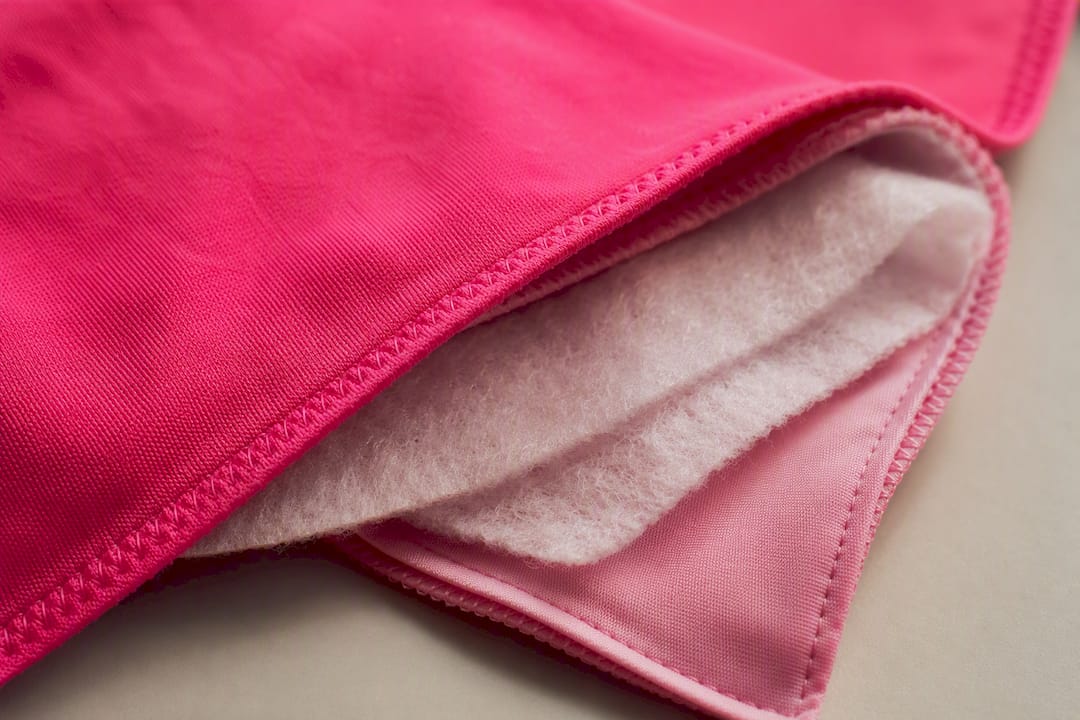
Outer shell and elastics: Recycled nylon or polyamide blends form most outer shells, with spandex (sold under names like LYCRA or ROICA) woven in for stretch and fit retention. Spandex quality is easy to overlook but directly affects how well the gusset seals against your body, which is the difference between “leak-proof” and “leak-prone.”
| Material | Best For | Watch Out For |
|---|---|---|
| Organic cotton | Sensitive skin, daytime light flow | Slower wicking, can feel damp |
| Tencel/Modal | Breathability, odor resistance | Slightly higher price point |
| Microfiber polyester | Heavy flow, athletic use, fast drying | Less breathable for all-day wear |
| Zorb (engineered absorbent) | Overnight and heavy-flow gussets | Adds cost versus basic terry |
| PUL/TPU membrane | Leak protection without PVC | Sub-type quality varies by brand |
Is PFAS a Real Concern in Period Underwear Materials?
Yes, and it’s worth taking seriously. Harvard T.H. Chan School of Public Health has raised questions about PFAS turning up in some menstrual products, pointing to a real gap in testing and transparency across the category. PFAS, or “forever chemicals,” are sometimes used to make fabric water- or stain-resistant, but they don’t break down in the environment or, evidence increasingly suggests, in the body.
You don’t need a chemistry degree to shop defensively. Look for these signals:
- OEKO-TEX Standard 100 certification, which tests the finished garment (not just raw fiber) for harmful residues
- GOTS certification, relevant if organic cotton or fiber sourcing is claimed
- Explicit, lab-backed PFAS-free statements, not just a marketing checkbox, since nontoxic period underwear guides now treat this as a baseline expectation rather than a bonus
- Fiber-level odor tech instead of surface antimicrobial sprays, since sprayed-on antimicrobials wash off over time while fiber-embedded solutions don’t
That last point deserves unpacking with supplemental period-care tools like Buy NuFemme - No Period Cramps | REBIRE. A lot of “odor control” claims come from a surface coating applied after the fabric is knit, which fades with every wash cycle. Fiber technologies like Creora Fresh instead build the odor-neutralizing function into the elastane itself, so it doesn’t rinse away the way a surface treatment does.
Pro Tip: Check the care tag and product description for words like “soil-resistant,” “stain-guard,” or “water-repellent” without a specific certification attached. Those phrases sometimes signal a fluorinated (PFAS-adjacent) finish that no one is required to disclose by name.
How Do You Choose the Right Period Underwear Material?
Start with your flow, then layer in your other priorities. Here’s the shopping order that actually works:
- Match absorbency to flow first. Light days call for a single Tencel or cotton top with light core support; heavy or overnight needs a multi-layer microfiber or Zorb core plus a TPU barrier.
- Flag skin sensitivity next. If synthetics irritate you, prioritize organic cotton or Tencel at the top layer even if it means accepting a slightly slower wicking speed.
- Decide how much sustainability matters. GOTS-certified cotton and recycled polyester shells cost more upfront but reduce landfill waste over years of reuse compared to disposables.
- Check the elastic composition. Cheap spandex loses recovery fast, and a loose gusset leaks even with a great core.
The real trade-off almost everyone runs into: maximum absorbency versus minimal bulk. You can chase either one, but you can’t fully max out both without the underwear feeling like a diaper. Sweeteebeauty’s multilayer designs are built around finding that balance rather than defaulting to “just add another layer.”
Washing and Lifespan by Material Type
Care routine determines whether your period underwear lasts one season or three years. Follow this order every time:
- Rinse in cold water immediately after wear to keep blood from setting.
- Machine wash cold or hand wash with a mild, bleach-free detergent.
- Skip fabric softener, which coats fibers and reduces wicking performance over time.
- Air dry or use low heat only, since high heat degrades both TPU membranes and spandex elasticity.
| Component | Typical Lifespan | Main Failure Cause |
|---|---|---|
| Microfiber core | Roughly 100+ wash cycles | Pilling, reduced absorbency over time |
| PUL/TPU membrane | Multiple years with proper care | High-heat drying, bleach exposure |
| Spandex/elastane | Gradual recovery loss over repeated washes | Chlorine, harsh detergent, heat |
Fibers like Xtra Life LYCRA and ROICA hold up better against chlorine exposure and repeated washing than standard spandex, which matters if you’re buying a swim-compatible style or washing daily during a heavy cycle.
Fixing Common Period Underwear Problems
Most complaints trace back to a mismatch, not a bad product. Odor usually means microbial growth combined with trapped vapor, not “dirty” underwear. A wet feel almost always points to a top layer that isn’t wicking fast enough for your flow. Staining comes from blood pigment setting into fiber before a proper rinse. Leaks are most often a fit problem (a loose gusset seal) rather than an absorbency problem.
- Choose a fiber-level odor solution like Creora Fresh instead of relying on sprayed-on antimicrobials that fade with washing.
- Rinse in cold water immediately, never let stained underwear sit in a hamper for days.
- Size for a snug, not loose, gusset seal, and check that the elastic hasn’t stretched out.
Pro Tip: Traveling or planning an overnight? Pack one extra pair, do a same-night cold rinse in the sink if you can’t wash immediately, and pick a Tencel or microfiber top layer since both dry faster than plain cotton.
What New Fiber Technology Is Changing Period Underwear?
Creora Fresh works by embedding odor-neutralizing chemistry directly into the elastane fiber matrix, rather than coating the surface after knitting. That structural difference is why the effect holds up wash after wash instead of fading within a few cycles.
This kind of fiber-level engineering is spreading beyond odor control. Manufacturer guidance on performance fibers documents several worth knowing:
- Xtra Life LYCRA resists chlorine breakdown, useful for swim-style period underwear
- PTT bio-fiber offers soft, consistent elastic recovery over repeated wear
- Tactel adds quick-dry durability for travel or athletic styles
Look for brands that name the specific fiber technology rather than a vague “moisture-wicking” claim with no fiber attached to it.
SweeTee Beauty’s Take on Choosing the Right Materials
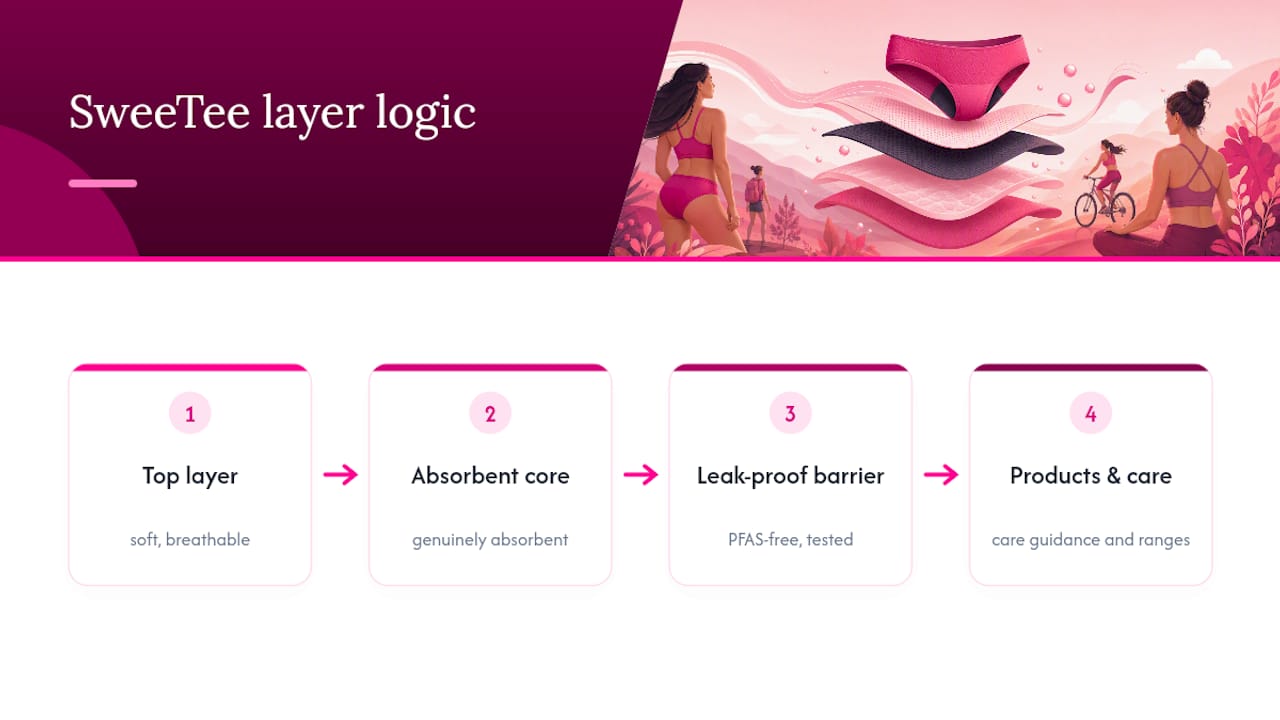
Sweeteebeauty builds every style around the same layer logic covered here: a soft, breathable top, a genuinely absorbent core, and a leak-proof barrier that’s PFAS-free and tested. Flow varies from person to person, so the underwear should too. For anyone ready to stop guessing and just shop by these standards, our care guidance and product ranges are built to answer that need directly.
Shop Period Underwear Built on These Material Standards
Everything covered above (wicking tops, engineered absorbent cores, PFAS-free membranes) is the exact criteria Sweeteebeauty applies to its own construction. Every pair uses a multilayer gusset with OEKO-TEX-tested components, so you’re not relying on a vague “leak-proof” label with nothing behind it. Styles range from teen-specific fits to heavy-flow protection, so the material match isn’t a compromise based on whichever size happened to be in stock.
If heavy or overnight flow is your main concern, the heavy-flow protection collection is built with the multi-layer microfiber and TPU combination this guide recommends for that use case. Teens navigating early cycles have their own fit and fabric needs, covered in the teen brief styles. Browse the full period underwear collection to find the flow level and fit that matches what you just learned about materials.
Sources
For deeper technical detail, these sources cover the mechanics and safety questions raised throughout this guide:
- Questions raised about PFAS in period products - Harvard T.H. Chan School of Public Health
- How Do Period Underwear Work? A Complete Guide - LJVogues
- Period Underwear: Fabric Selection Guide — Wazoodle Fabrics
For hands-on comparisons, visit Sweeteebeauty’s full period underwear collection.


