
Split Your Period Travel Essentials Between Carry-On and Checked Bags

Pack your regular menstrual products plus a leak-proof backup like period underwear, a sealed wet bag for used items, fragrance-free wipes, and basic pain relief from the Personal Care Collection – Blaze Brands. Split your supplies between carry-on and checked luggage so a lost or delayed bag never leaves you without options. That single move, spreading your period travel essentials across both bags, solves more travel emergencies than any single product on the market.
TL;DR:
- Pack a variety of disposable and reusable products, including period underwear, pads, and tampons, to ensure coverage during delays or no-utility days.
- Store used reusable items in a double-zip sealed wet bag to prevent odor and leaks, rinsing when water access is available.
- Carry a small emergency kit with a liner, pad or tampon, wipes, pain relief, and hydration supplies in your daily bag to handle unexpected period starts.
- Be aware that TSA treats menstrual products as household items with no quantity restrictions, but liquids like solutions require travel-sized containers.
- Climate and activity influence product choice and timing, so increase product rotation and hydration, especially in hot, humid, or high-altitude environments.
Table of Contents
- Your Period Travel Essentials Checklist
- Packing Smart: What TSA Actually Allows
- Caring for Reusables While You Travel
- Comfort and Symptom Relief on the Go
- Swimming, Camping, and Long Flights
- When Your Period Starts Without Warning
- Managing Your Period in Hot, Humid, or Cold Climates
- Period Products Around the World: What to Expect
- Staying Comfortable on Long Flights and Multi-Day Trips
- Easing Period Symptoms Through Diet While Traveling
- What Actually Matters When You’re Packing for This
- Why Period Underwear Belongs in Your Travel Bag
- Sources
Your Period Travel Essentials Checklist
Build this list around one idea: redundancy. You want a product for comfort, a product for backup, and a system for the mess in between. Here’s the order that actually matters, not just an alphabetical dump.
- Your regular product. Whether that’s tampons, pads, or a cup, bring your normal supply plus 25% extra. Flights get delayed, road trips run long, and “just in case” days add up fast.
- Leak-proof period underwear. A pair of reusable, absorbent underwear covers you on travel days when laundry isn’t an option and gives you a comfort layer even on light days. Pack at least two pairs for trips longer than a short weekend.
- Panty liners. Thin, light, and useful as a secondary layer under period underwear on heavier days or as standalone coverage near the end of your cycle.
- Disposable backups. Even committed reusable users should carry a few pads or tampons for emergencies, shared bathrooms, or moments when there’s no sink in sight.
- A sealed wet bag. This is non-negotiable for anyone using reusables. Store used period underwear here until you can rinse or launder it, and keep it separate from clean clothes.
- Fragrance-free wipes. Useful for a quick refresh during long travel days, but skip scented versions since they raise the risk of irritation with routine use, according to Condé Nast Traveler’s packing guide.
- Small disposal bags. Not every bathroom abroad has a bin in the stall, so carry your own way to store used items until you find proper disposal, a tip echoed in FabLittleBag’s period travel guide.
- One spare pair of regular underwear. Cheap insurance against a surprise leak mid-trip.
- Pain relief and heat patches. Ibuprofen or acetaminophen in original packaging, plus a couple of adhesive heat patches for cramps when a heating pad isn’t an option.
- Hand sanitizer and a mini stain stick. Small, light, and they solve two of the most common travel-day headaches.
The pattern across this whole list is hybrid thinking: reusables for comfort and sustainability, disposables for the days when you have no access to a sink or laundry. Neither approach alone covers every situation you’ll hit on a real trip.
Pro Tip: Pack a “just in case” mini kit, one liner, one disposable pad, and two wipes, in a snack-size bag inside your daily carry bag. It weighs nothing and saves you from digging through a suitcase in an airport bathroom.
Packing Smart: What TSA Actually Allows
Pads, tampons, menstrual cups, and liners are allowed in both carry-on and checked luggage, and TSA treats them as ordinary personal hygiene items with no declaration required and no specific quantity cap for personal use.
Liquids are where people trip up. Cup-cleaning solution and any liquid toiletries still fall under the standard carry-on liquids rule, so buy travel-size bottles or transfer solution into a small container before security. Carry an empty water bottle through the checkpoint and fill it after.
- Keep a 1 to 2 day supply plus pain medication in your carry-on, never checked only.
- Pack extras, backup underwear, and bulkier items in checked luggage.
- On long layovers, keep your wet bag and a spare pair of underwear in the bag that stays with you.
Caring for Reusables While You Travel
A sealed wet bag is the backbone of traveling with reusable products. The moment you change, drop the used pair straight into the bag rather than leaving it loose in your toiletry kit. SmarterTravel’s guide to period underwear for travel recommends this exact routine, and notes that most experienced travelers mix reusables for daytime comfort with disposables on days when laundry access is zero.
A simple rhythm works for most trips:
- Rinse in the sink if you have privacy and running water.
- Store rinsed or unrinsed items in the wet bag until evening.
- Do a full wash at your hotel sink or a laundromat, then air-dry overnight.
- Skip reusables entirely on transit days with shared bathrooms or no sink access, and lean on disposables instead.
Pro Tip: Choose a wet bag with a double-zip seal, not a drawstring. It contains odor far better and won’t leak into your bag if you’re moving between transit stops.
Comfort and Symptom Relief on the Go
Small items make an outsized difference here. Pack ibuprofen or acetaminophen in original packaging (loose pills can raise questions at security), a couple of adhesive heat patches, and a refillable water bottle since dehydration makes cramps worse.
- Snacks with iron or magnesium, dried apricots, nuts, dark chocolate, help offset fatigue on long travel days.
- Stand up and stretch every hour or two on flights or long drives.
- Wear breathable layers and dark-colored bottoms.
- Pack one spare pair of underwear per travel day, not per trip.
Condé Nast Traveler’s guide on managing your cycle while traveling points out that even booking a seat with extra legroom can meaningfully cut discomfort on a rough day.
Swimming, Camping, and Long Flights
Different activities call for different setups.
- Swimming: Internal products or period swimwear work best. Change as soon as you’re done, and pack a dark towel plus a spare swim bottom.
- Camping and outdoor trips: Period underwear or a cup plus disposal bags cover you when there’s no bin anywhere near the trail. Assume you’ll pack out everything.
- Long-haul flights: Pick an aisle seat if you’re using a cup, since rinsing mid-flight takes planning. Carry a small bottle of water or cup wipes for cleanup, and keep supplies split across your carry-on and seat bag.
When Your Period Starts Without Warning
Travel throws your cycle off more than people expect. Time zone shifts, stress, and disrupted sleep can all nudge your period early or late, so the “it’s not due yet” assumption fails more often on the road than at home.
The fix isn’t panic, it’s preparation. Always carry a mini emergency kit even during the week you’re not expecting your period: one liner, one pad or tampon, and a couple of wipes tucked into your daily bag. If your period does start unexpectedly and you’re caught without supplies, most airports, train stations, and hotel front desks stock at least basic pads or tampons, sometimes for a fee, sometimes free in the restroom itself.
If you’re somewhere without easy access, a rolled-up sock, tissue, or extra layer of clothing works as a temporary stopgap until you reach a store. Pharmacies in most countries carry some form of pad or tampon even when brand selection is limited.
The bigger lesson: don’t wait until day one of your expected cycle to start carrying products. Keep a small stash in your daily bag from the day you leave home until the day you return, regardless of where you are in your cycle. That single habit eliminates most “caught off guard” scenarios travelers describe.
Managing Your Period in Hot, Humid, or Cold Climates
Climate changes how your body handles a period, and it changes what actually feels comfortable to wear and use.
In hot, humid destinations, sweat and moisture increase the chance of irritation, so change disposable products more often than you would at home and favor breathable, moisture-wicking underwear. Period underwear with a cotton or bamboo-blend lining tends to feel less clammy than synthetic-only fabrics in tropical heat. Carry extra wipes since humidity makes a quick refresh feel necessary more often.
Cold climates bring a different problem: layers make bathroom changes slower and more awkward, and cramps can feel worse when you’re also cold. Pack a compact adhesive heat patch you can stick directly to your lower abdomen under your clothes, it works even while you’re hiking or sightseeing, no outlet required. Staying hydrated matters here too; cold weather tricks people into drinking less water, which can worsen cramping.
Dry climates, deserts, high altitude, dehydrate you faster than you’d notice, and dehydration is one of the more overlooked cramp triggers. Carry a reusable water bottle and treat refilling it as a habit tied to every bathroom break, not an afterthought.
Whatever the climate, the core packing strategy doesn’t change. What shifts is how often you rotate products and how much you lean on hydration and breathable fabric to stay comfortable.
Period Products Around the World: What to Expect
Availability of period products varies widely once you leave home, and assuming your usual brand or product type will be on the shelf is a common travel mistake.
Tampons are harder to find in parts of Asia, the Middle East, and Latin America than in the United States, while pads are nearly universal. Menstrual cups remain a niche product in many countries, so don’t count on restocking one if it’s damaged or lost mid-trip. Period underwear, being a newer category everywhere, is rarely sold locally at all, which is exactly why packing enough for your full trip matters more for that item than for pads or tampons.
Cultural attitudes shift the experience too. In some destinations, buying period products is entirely casual and shelved in the open; in others, they’re kept behind the counter or sold discreetly, and asking for them by name may draw more attention than you’re used to. A little research on your destination before you go, even a quick search for “buying pads in [city name]”, saves an awkward moment.
Public restroom norms vary just as much. Not every country provides a trash bin inside the stall, so the disposal-bag habit mentioned earlier in this guide isn’t just a hygiene preference abroad, it’s often a necessity. When in doubt, carry your own solution and don’t assume the facility will have one.
Staying Comfortable on Long Flights and Multi-Day Trips
Long flights and multi-day itineraries put a different kind of pressure on your period care than a quick weekend trip. The core challenge is access: to bathrooms, to laundry, and to a private moment to change or rinse a cup.
On flights over four or five hours, plan at least one bathroom trip specifically for a product change, don’t wait for the moment cramps or discomfort force it. If you use a cup, an aisle seat makes that trip faster and less disruptive, and a small bottle of water or cup wipes lets you rinse discreetly at the sink. Keep your comfort kit, pain relief, a heat patch, and a spare pad, in your seat bag rather than the overhead bin.
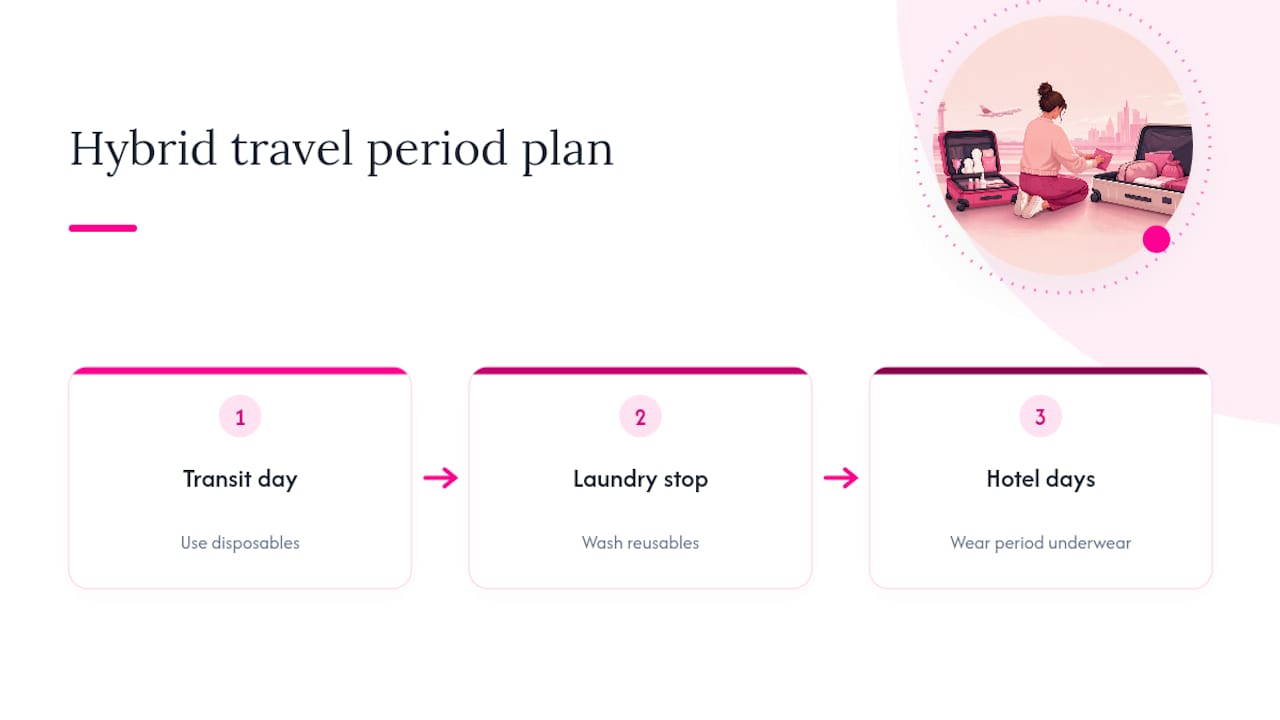
For multi-day travel without predictable laundry access, the hybrid approach earns its keep. Wear period underwear on days you know you’ll reach a hotel or laundromat, and switch to disposables on transit days or when you’re staying somewhere without a private sink. Many travelers on extended trips build in one deliberate “laundry stop,” a hotel night or laundromat visit mid-trip, and limit reusable use around that stop rather than trying to wash items in a shared hostel bathroom.
Sleep disruption from time zones can also intensify cramps and fatigue, so don’t skip pain relief just because you’re “pushing through” jet lag. Treat comfort items as part of your daily routine for the whole trip, not just an emergency measure.
Easing Period Symptoms Through Diet While Traveling
What you eat on the road affects cramps, bloating, and energy just as much as it does at home, arguably more, since travel food is often heavier in salt and lighter on the nutrients your body wants during your period.
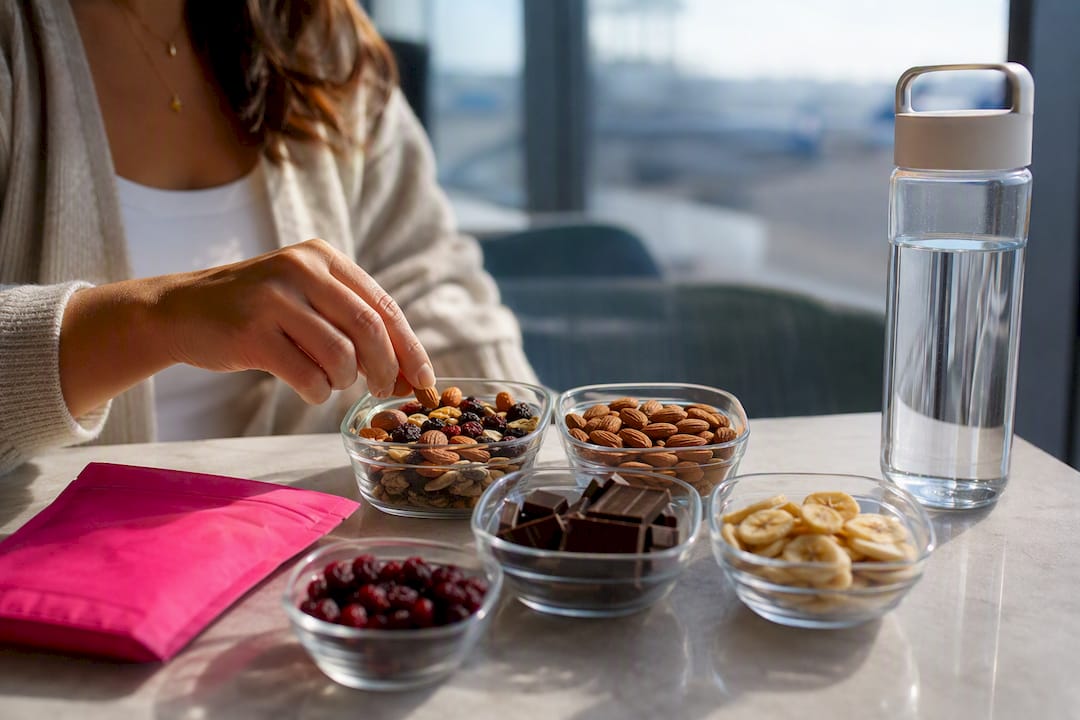
Reach for iron-rich snacks, nuts, dried fruit, or a small portion of lean protein when you can get it, since blood loss during your period can leave you low on iron and more prone to fatigue. Magnesium-rich foods like dark chocolate, bananas, and leafy greens (when available) may help ease cramping. Airport food courts and gas station snack aisles rarely make this easy, so packing a small stash of trail mix or dried fruit gives you a fallback when the only options are fried and salty.
Salt is worth watching specifically because travel meals, airplane food, fast food, hotel breakfasts, tend to run high in sodium, which can worsen bloating right when you’re already dealing with period-related water retention. Balance it out by drinking more water than you think you need; dehydration compounds both bloating and cramps.
Caffeine and alcohol are the two most common culprits travelers don’t connect to worse symptoms. Both can intensify cramping and disrupt the sleep you need to recover from jet lag, so cutting back, not eliminating, either during the first day or two of your period usually pays off more than any other single diet change you can make on a trip.
What Actually Matters When You’re Packing for This
Most packing guides treat period products like an afterthought, a single bullet point buried in a “toiletries” section. That’s backwards. A period that starts on the wrong day of a trip can derail more plans than a lost passport, yet almost nobody plans for it with the same care they plan for weather or currency.
The biggest misconception is that you have to choose a camp: reusable or disposable, cup or pad. You don’t. The travelers who handle periods best on the road are the ones running both systems at once, reusables for comfort and sustainability, disposables for the days laundry isn’t happening. Test any new product at home first, never for the first time mid-trip. Keep a tiny stain stick in your bag; it’s cheap, weighs nothing, and it’s saved more shirts than any other item on this list. A single adhesive heat patch tucked into a jacket pocket has gotten me through more uncomfortable transit days than pain medication alone.
If you’re considering period underwear for travel, try one pair at home before you commit a whole trip’s supply to it. See how it holds up through a full day before you pack five pairs and nothing else.
— Tiera
Why Period Underwear Belongs in Your Travel Bag
For travelers tired of digging through a suitcase for the right disposable product at the wrong moment, period underwear solves a real logistics problem: fewer changes, less packaging to carry out, and nothing that needs to be unwrapped in a cramped airplane bathroom. Period underwear with a multilayer, leak-proof design is available across light, moderate, heavy, and postpartum absorbency levels, so you can match the product to the day instead of overpacking for the worst case every single time.
For a quick day trip or a light flow day, a lighter absorbency pair keeps things simple. For a heavy travel day, long layovers, overnight flights, road trips with no bathroom access for hours, the heavy flow protection collection gives you longer coverage without needing a mid-flight change. The HipHugger period underwear bundle is built specifically for travelers who want a few absorbency levels on hand without packing a separate product for every scenario, and the lace HipHugger style works if you want something that doesn’t look purely functional under travel clothes. Browse the full Sweeteebeauty lineup and pick one pair to test at home before your next trip.
Sources
- SmarterTravel: Period underwear for travel
- Condé Nast Traveler: Comfortably traveling on your period


