
Never Run Out: Pack 5 to 7 Pairs for Dorm Period Underwear

Yes, you can wear and wash period underwear in a dorm. Rinse them in cold water right after taking them off, wash on a gentle cold cycle or by hand, and skip the dryer heat and fabric softener. Pack 5 to 7 pairs so you’re never stuck waiting on a load to finish. These three habits protect absorbency and keep bacteria from building up in shared laundry spaces.
TL;DR:
- Washing period underwear in a dorm requires rinsing in cold water immediately after use to prevent stains and fabric damage.
- Using a mesh laundry bag, delicate cycle, and air drying only helps preserve the absorbency and longevity of the underwear.
- Having five to seven pairs ensures a full week’s supply, especially for heavier flows, without frequent laundry visits.
- Hot water, dryer heat, fabric softeners, and bleach significantly reduce the lifespan and effectiveness of period underwear.
- Testing new pairs at home before use helps understand their hold time and feel, preventing surprises during busy campus days.
Table of Contents
- What Do You Actually Need for Dorm Laundry With Period Underwear?
- How Do You Wash Period Underwear in a Dorm?
- How Do You Get Blood Out and Dry Period Underwear in a Small Room?
- How Many Pairs Do You Need and When Should You Wash Them?
- What Ruins Period Underwear Fastest?
- What Does SweeTee Beauty Recommend for Dorm Care?
- Why Testing at Home Beats Trusting the Packaging
- Where SweeTee Beauty Fits Into Your Dorm Routine
- Sources
- FAQ
What Do You Actually Need for Dorm Laundry With Period Underwear?
You don’t need a lot of gear, just the right gear. A dorm laundry checklist for delicate items usually points to a handful of small tools that make a huge difference when you’re sharing three washers with sixty other people on your floor.
Start with the pairs themselves. Five to seven is the number that comes up again and again in clinic guidance on period underwear, because four pairs only buys you about two days of coverage before you’re doing an emergency sink wash at midnight. Six or seven gets you through a full week, even if laundry day gets pushed.
Beyond the underwear itself, here’s what belongs in your dorm laundry bin:
- Collapsible drying rack — folds flat under a bed, sets up in minutes, and keeps pairs off a shared drying line.
- Mesh laundry bag — protects seams and elastic in a communal washer and keeps your period underwear from disappearing into someone else’s load.
- Travel detergent pods or powder — a small unscented supply so you’re not lugging a full jug down the hall.
- Small squeeze bottle — for a fast pre-rinse at the sink before a wash cycle.
- Enzyme stain remover or a travel stain stick — for anything that didn’t get treated fast enough.
- Waterproof wet bag — for storing a used pair discreetly until laundry day.
Label your rack and bag if you’re sharing a room. It sounds unnecessary until your roommate’s roommate borrows your drying rack for a wet swimsuit. Keep one emergency pair and a pad or panty liner in your desk drawer for the day your laundry plans fall apart.
How Do You Wash Period Underwear in a Dorm?
The method you pick depends on what’s available: a sink, a communal machine, or a portable mini-washer. All three work. Here’s how to run each one correctly.
-
Cold rinse first, always. As soon as you take them off, rinse under cold running water until it runs clear. This isn’t optional. Hot water reacts with blood proteins and can lock the stain into the fabric permanently, which also damages the absorbent layers underneath. Don’t scrub hard here, just let the water do the work.
-
Hand-wash in the sink. Fill the sink or a basin with cold water and a small amount of mild, unscented detergent. Soak for 10 to 30 minutes, then gently rub the fabric between your fingers, focusing on the gusset. Rinse again until the water runs clear.
-
Machine-wash with a mesh bag. Zip the underwear into a mesh laundry bag before tossing it in a communal washer. Set the machine to the delicate or gentle cycle, cold water only, and add an extra rinse if your machine allows it. Don’t mix them with towels, hoodies, or anything with zippers that can snag the fabric.
-
Portable mini-washer, if you have one. These small units, often just a few liters of capacity, work well for a single pair or two between full laundry runs. Use a short gentle cycle with cold water, and skip the spin setting if it runs hot.
Pro Tip: Before you rely on a new pair for a full day of classes, test it at home first on a lighter flow day. You’ll learn exactly how long it holds and how it feels wet versus dry, which beats finding out during a 9 a.m. lecture.
How Do You Get Blood Out and Dry Period Underwear in a Small Room?
Cold water is the whole game here. Hot water sets protein-based stains almost instantly, while cold water keeps blood from bonding to the fibers in the first place. If you catch a stain early, a cold soak alone usually handles it.
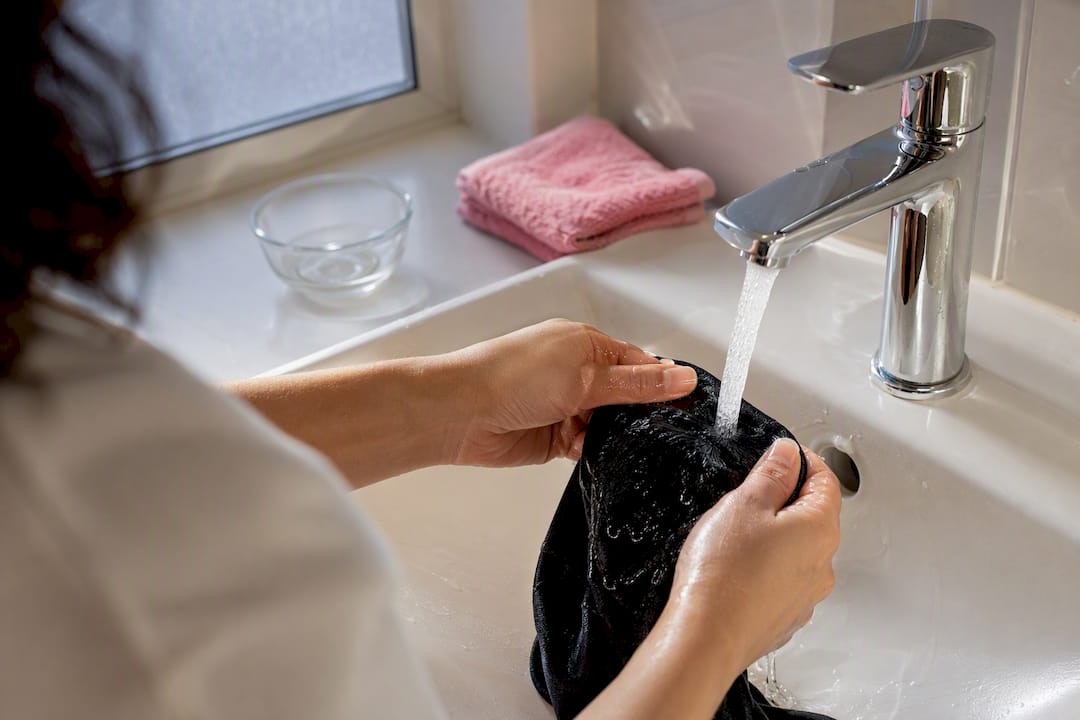
For anything that’s already dried or set, reach for an enzyme-based detergent or stain remover and let it sit on the fabric for 15 to 20 minutes before washing. A paste of baking soda and cold water works as a gentler DIY option if you don’t have an enzyme product on hand. Skip bleach entirely. It’s harsh enough to weaken the layers that make period underwear work in the first place.
Odor is a separate issue from staining. A quick rinse in diluted white vinegar can neutralize smell before a full wash, though you should check your specific pair’s manufacturer care instructions first since some fabrics react differently.
Drying without a dryer takes a little planning:
- Roll the pair in a clean towel and press firmly to squeeze out excess water before hanging.
- Use a high spin cycle if your machine has one separate from the heat cycle. It pulls out most of the moisture without cooking the fibers.
- Hang on a collapsible rack near a window, fan, or your room’s air vent for faster airflow.
- Never put period underwear in the dryer, even on low heat. Heat “cooks” blood proteins into the fibers and can permanently reduce how much they absorb.
Skipping the dryer isn’t a minor inconvenience. It’s the difference between a pair lasting years and one losing its absorbency after a handful of washes.
How Many Pairs Do You Need and When Should You Wash Them?
Several pairs is the sweet spot, but the right number depends on your flow and how often you can realistically get to a washer. If your dorm’s laundry room is always packed on weekends, lean toward having more pairs.
Heavy-flow plan (7 pairs):
- 2 pairs rated for heavy flow, worn on your first two heaviest days
- 3 pairs for moderate flow, rotated through the middle of your cycle
- 2 light pairs for tail-end days
- Wash every 2 to 3 days so you’re never down to your last clean pair
Light-flow plan (5 pairs):
- 1 heavy pair kept as backup for surprise heavy days
- 3 moderate pairs for regular rotation
- 1 light pair for the final day or two
- Wash every 3 to 4 days
Keep a spare pair and a couple of panty liners tucked in a drawer for the week your laundry card runs out of funds or the machines are all in use. That backup pair should never be part of your regular rotation. It’s there for the one week everything goes wrong at once.
What Ruins Period Underwear Fastest?
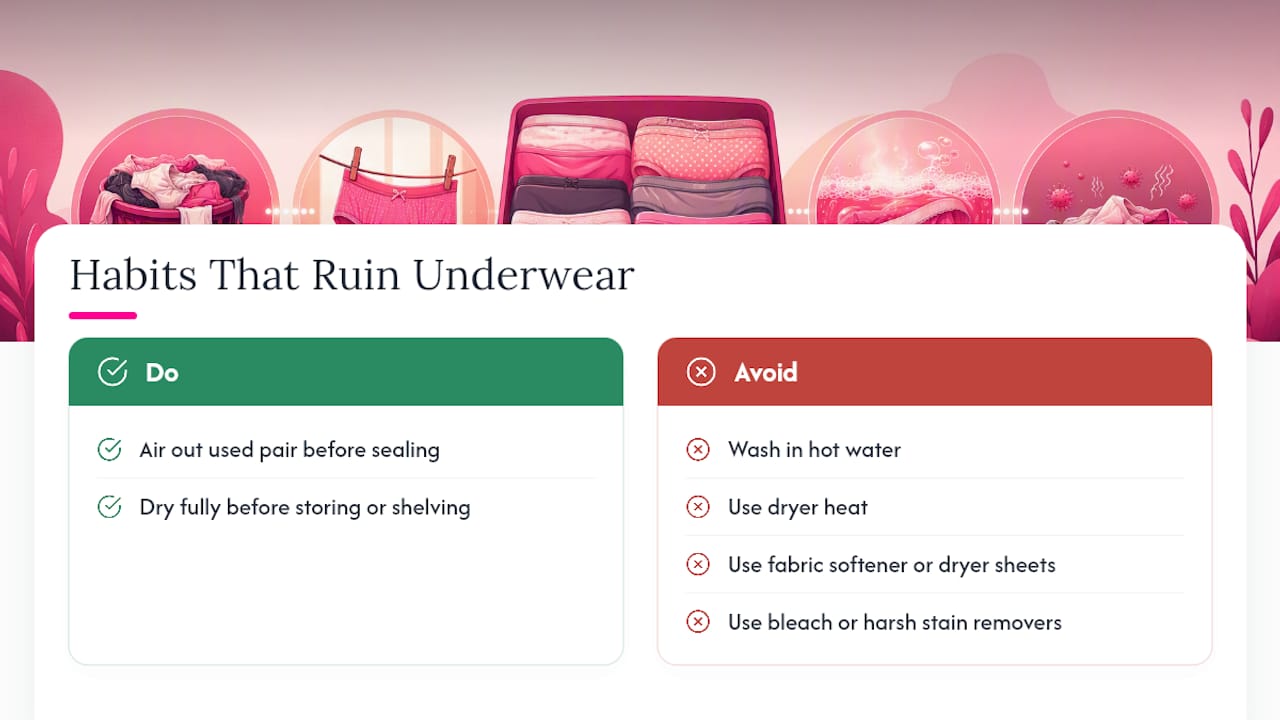
A handful of habits quietly wreck absorbency long before a pair actually looks worn out. Hot water and dryer heat top the list. Both set stains permanently and break down the moisture-wicking layers that make period underwear work at all.
Fabric softener and dryer sheets are just as damaging, even though they seem harmless. They coat fibers in a residue that repels water instead of absorbing it, which defeats the entire purpose of the product. Bleach and other harsh stain removers do similar damage, breaking down the fabric itself over repeated washes.
The last mistake is storage. Tossing a damp, used pair into a closed hamper or gym bag creates the exact conditions mildew needs to grow. Let a used pair air out briefly before sealing it in a wet bag, and never leave a washed pair damp on a shelf.
What Does SweeTee Beauty Recommend for Dorm Care?
Sweeteebeauty’s own care guide lines up closely with the OB-GYN guidance most hygiene experts repeat: cold rinse first, gentle wash, air-dry only. That overlap matters because it means students aren’t choosing between “what the brand says” and “what a doctor would say.” They’re the same routine.
Period underwear comes in various absorbency levels, including light, moderate, heavy, and postpartum, to accommodate different flow needs that can vary day to day. A few practical notes worth knowing before you buy:
- Some styles are designed to provide protection suitable for overnight wear or long class periods without a break.
- Seamless and high-waist cuts can work under fitted clothing without visible lines, which may be important in shared campus spaces.
- Bundles can help students build a 5 to 7 pair rotation without purchasing pairs individually.
Why Testing at Home Beats Trusting the Packaging
Test any new pair at home before your first busy week on campus, on a lighter day if you can. You’ll learn how long it actually holds and how it feels once it’s wet, which the packaging can’t tell you. Build a 5 to 7 pair rotation early, invest in a $10 drying rack and a mesh bag, and talk with your parents now about restocking before your supply runs low, not after.
— Tiera
Where SweeTee Beauty Fits Into Your Dorm Routine
Building a 5 to 7 pair rotation gets expensive fast if you’re buying single pairs at full price. Sweeteebeauty solves that with bundles built around exactly the number students need for a full week without a laundry gap.

For heavier days or overnight wear, the heavy flow protection collection covers the two or three pairs most students need at the start of their cycle. The HipHugger bundle rounds out a rotation with moderate-absorbency styles that layer flat under dorm-room clothes, and the lace HipHugger style works for lighter days when you still want something comfortable enough to forget you’re wearing. Pair any bundle with the brand’s step-by-step care guide so your pairs last the full school year instead of fading by midterms. Browse the full lineup at Sweeteebeauty and put together a rotation before move-in day, not after.
Sources
- How to Clean Period Underwear and Reusable Products | Apartment Therapy
- What Is Period Underwear and Does It Work? | Cleveland Clinic
- How to Wash Period Underwear: 6 Steps to Stay Clean and Fresh | LaundrySauce
FAQ
Can I Wash Period Underwear in a Washing Machine?
Yes, place it in a mesh laundry bag and run a gentle or delicate cycle with cold water. Avoid mixing it with heavy items like towels or jeans that can stretch the fabric.
Do Gynecologists Recommend Period Underwear?
Many OB-GYNs support period underwear as a hygienic option, with the caveat that dampness, not a visible line, is the cue to change them. The general recommendation is to change within 12 hours, sooner on heavier flow days.
How Do You Laundry-Strip Period Underwear?
Laundry stripping (a long soak in hot water with detergent and borax to remove buildup) is generally not recommended for period underwear, since hot water damages absorbent layers. Stick to cold washes and an occasional enzyme soak instead.
Why Was There a Lawsuit Against a Period Underwear Brand?
Past legal action against a period underwear company centered on claims about PFAS (“forever chemicals”) in some products, which pushed the wider industry toward more transparent material disclosures. It’s a good reason to check a brand’s fabric composition before buying.
How Many Pairs of Period Underwear Should I Bring to College?
Five to seven pairs covers a full week between laundry days, with heavier-flow students leaning toward the higher end of that range.


